
Violet Township Previous Residents by Era
Previous residents research follows two trails. The land trail uses a parcel, legal description, and recorded conveyance to identify a sequence of parties. The household trail uses dated directories, census records, obituaries, cemetery material, and probate evidence to test who may have been associated with the place at a particular time. The sources overlap, but none supplies a complete history by itself.
Start with the most stable identifier available. In Fairfield County, that is usually the permanent parcel number and legal description on the current assessment record. The era table distinguishes an online index from a document image and a household clue from a property fact.
| Source | Years | Where Held | What Shows |
|---|---|---|---|
| Recorder grantor and grantee deed index | 1800-1979 index books; index to present | AVA and Recorder counter | Parties, legal land identifier, book and page route |
| Recorder document images | January 1980 forward, subject to result-level checking | AVA and Recorder | Recorded conveyance image when available |
| Auditor sales, owner, and permit fields | Current system; historical start not stated | Auditor property portal | Assessment-owner, sale, building, and permit-event clues |
| Federal census | Released through 1950 under the 72-year schedule | Archives and library genealogy resources | Dated household, relationship, age, and occupation snapshot |
| Regional directories and telephone sources | Specific Violet year run not posted | Historical Society and libraries | Address or household clue within a volume's coverage |
| Historic maps and atlases | 1875 Everts Fairfield County atlas identified | Ohio History Connection and library routes | Landowner and road context, not a verified Violet Sanborn run |
Use the Recorder chain when the question concerns a recorded transfer. Use libraries and archives to add people and dates around that chain. If an older item is not online, the next channel is the Recorder counter, a specific library request, or an archival inquiry, rather than a broad name search.
Start Violet Township Parcel History
The Fairfield County Auditor real-estate search is the starting point for an address history. Search the current address, owner name, or parcel number, then record the permanent parcel number, situs, city or township, legal description, and current deeded owner. The report separates a physical situs from deeded-owner and tax-payer mailing addresses. A mailing address may be useful as a dated notice clue, but it is not a list of everyone at the parcel.
Find the sale or acquisition details next. The Auditor report can show sales information and a permit table with date, number, purpose, status, and amount. Those fields can help date an event, but they are not title proof and do not establish a household. The original recorded document controls a legal transfer. Preserve the legal description even where an address appears familiar, because it is the bridge across changes in road naming and postal labels.
Note: Auditor owner, sales, and permit fields frame the parcel trail, while the Recorder's indexed conveyance supplies the document route.
Violet Township Previous Residents: Old Index Books
The Fairfield County Recorder keeps an index from 1800 to the present and says online document images begin in January 1980. For 1800 through 1979, the older route is an index-book search, not a modern address filter. Select document type INDEX, enter the first letter in the last-name field, and use the result's GR or GE designation, book date or alphabetical range, key page, and index-book page to reach the underlying entry.
GR identifies a grantor, the person conveying an interest. GE identifies a grantee, the person receiving it. The displayed recorded date for an old index-book result can be a placeholder rather than the original document date. For 1800 through 1970, names may be cutouts or mixed groups that require the key page and matching alphabet range. The 1971 through 1996 material uses cutout-name and key-page navigation, while the 1980 through 1996 document route may require resetting the search and using book and page.
The Recorder's old deed-index guide illustrates the mechanics of this historical route.
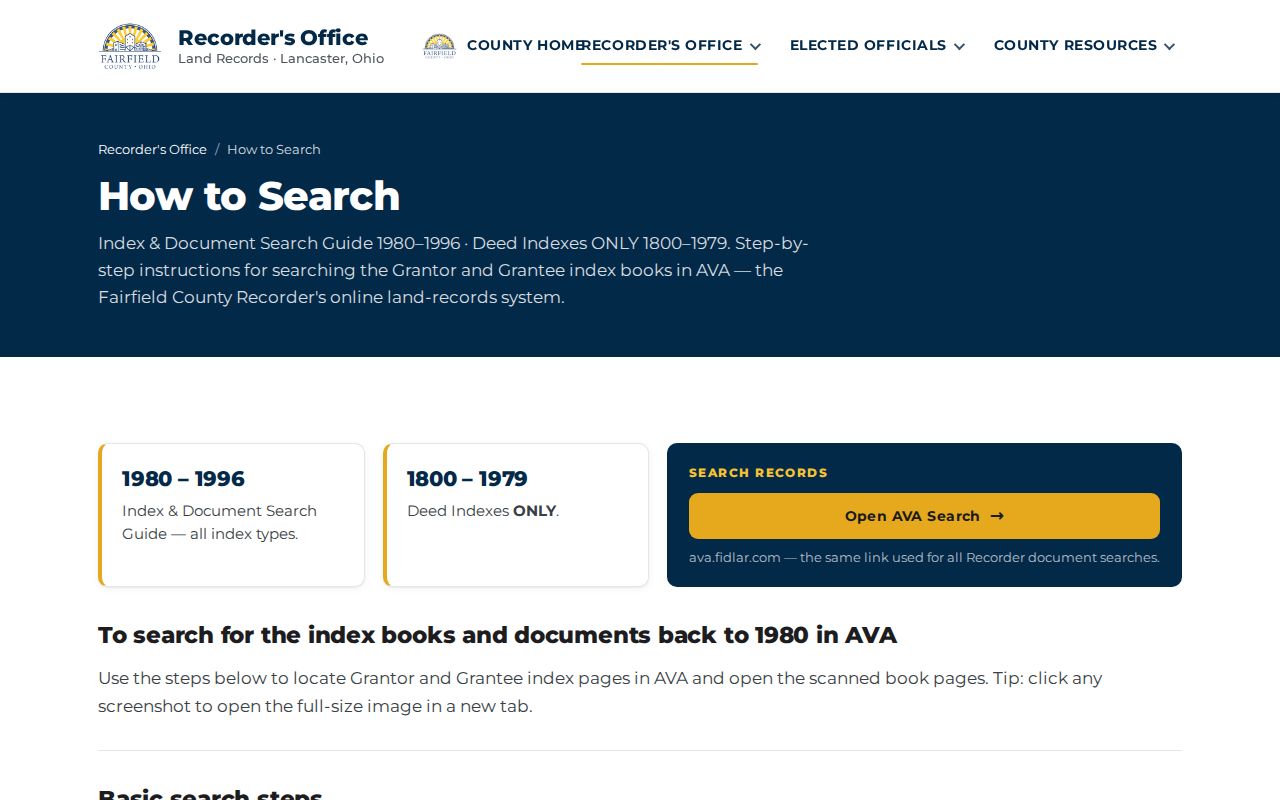
Book, page, key, and GR or GE are navigation clues. They should lead to the image or counter record, not replace the underlying instrument.
Trace Violet Township Previous Residents Through Deeds
Ohio Revised Code section 317.18 requires the Recorder's direct grantor and reverse grantee indexes. That structure supports a backward chain of title. A recorded party is a party to the document, not proof that the person made the property a home. Match the legal description, plat, subdivision, lot, or parcel identifier at every link before treating two records as the same property.
- Open the current Auditor parcel report and record the PIN, legal description, current deeded owner, and acquisition or sale clue.
- Search the owner as a grantee in Recorder AVA to identify the acquisition instrument.
- Transcribe the grantee, grantor, recording information, book or page, instrument number, and legal description from the document or index entry.
- Use the seller, now the prospective earlier owner, as a grantee to locate that person's earlier acquisition.
- Repeat the comparison backward, using the Recorder counter and index books when an older image is not available online.
- Grantor
- The party who conveys an interest in a recorded document. In the historic index, GR is the grantor route.
- Grantee
- The party receiving an interest. GE marks the grantee route used to find an acquisition.
- Chain of title
- A sequence of recorded conveyances connected by the same legal land description, not merely a repeated street label.
- Legal description
- The recorded land identifier, such as a lot, survey, section, subdivision, or parcel reference, used to compare a property across time.
The Recorder AVA landing page is the public entry to the county's index and image system.
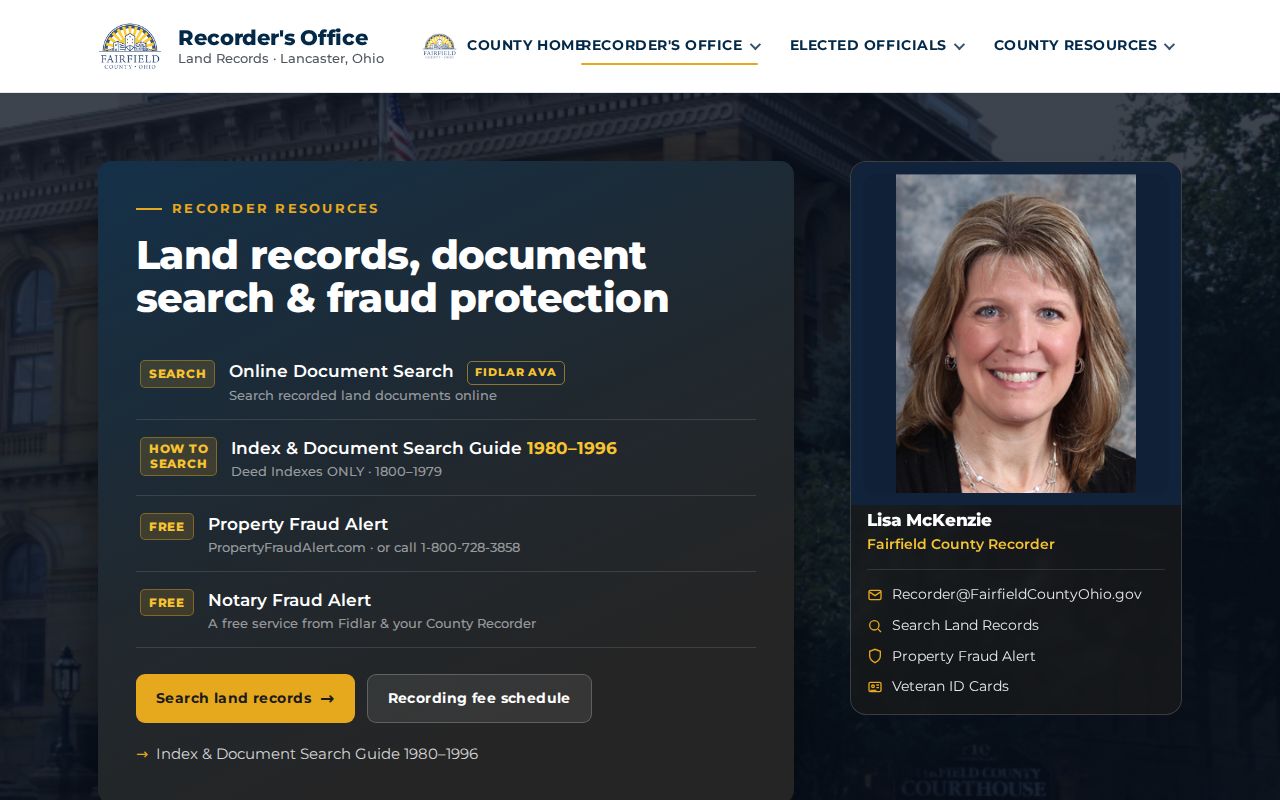
Staff can explain how to use the records, but the historic trail still requires a researcher to compare each instrument and its legal land information.
Violet Township Previous Residents and Address Changes
An apparent address break may be geographic rather than personal. Fairfield County approved permanent public-road names in 1964 after some roads had as many as six names. The County began issuing and documenting rural addresses in 1966. Older deeds, indexes, and atlases can therefore use an earlier road name, rural description, quadrant, or legal land reference that does not match a modern mailing address word for word.
Keep the road type, directional quadrant, postal town, subdivision or plat, and legal description together. The County's rural system uses NW, NE, SW, and SE quadrants and generally 1,000 numbers per mile. In the northern part of Violet Township, Refugee Lands descriptions can add another historical layer. These details help determine whether two labels point to the same place without inventing a formal address-renumbering project.
Violet Township Previous Residents and Permit Dates
Permit and sale entries can make a timeline more precise. The Auditor's parcel report may show permit date, number, purpose, status, and amount, plus sales information. Violet Township Building and Zoning is the local route for an exact permit or plan history, while no public searchable township permit database was located. Ask for a particular address, date range, permit number, or record series rather than assuming the web record includes every file.
Permit data describes a project or recorded event. It may identify an applicant or owner in that context, but it does not prove every past resident. For a request fallback, the township's public contact and records channel routes communications, and the Fiscal Office maintains a public-document portal for local meeting and planning material. Keep a permit event separate from the deed chain and household evidence.
Violet Township Past Household Clues
The deed chain names recorded parties, but it does not settle who lived at the property. For a household layer, pair a dated directory or telephone clue with a released federal census, obituary, cemetery, or archival source. The Violet Township Directory Book identifies the regional and local collections without claiming a complete township directory run. The Pickerington-Violet Township Historical Society and Fairfield County District Library are the local research routes when a name or address needs support.
- Choose a directory, telephone, cemetery, or newspaper clue with a clear date and source citation.
- Compare its address and name spelling with the parcel's legal-description timeline.
- Check the nearest released federal census for a household snapshot, keeping its census date separate from the directory date.
- Use local library obituary help or cemetery material to investigate a gap in the sequence.
- Return to the Recorder or Probate Court if an estate transfer may explain a change in the land trail.
No official online Violet criss-cross directory, house-history guide, or Sanborn coverage list was verified. The counter, library, historical society, and archives are the documented alternatives. A missing directory entry should remain an unanswered gap until another record supports a conclusion.
Violet Township Previous Residents at Life Endpoints
A death or estate record can explain why a name disappears from a land or household trail. The Ohio History Connection Death Records Index covers Ohio Department of Health death certificates for 1913-1944 and 1954-1970. Its broader collection reaches 1908-1970, while deaths before December 20, 1908 follow the county-ledger path. An archival order uses first name, last name, and year plus a month or day, county, or certificate number. This is event evidence, not a residence finding.
The historical death-index route can help fix a date for Violet Township previous residents research.
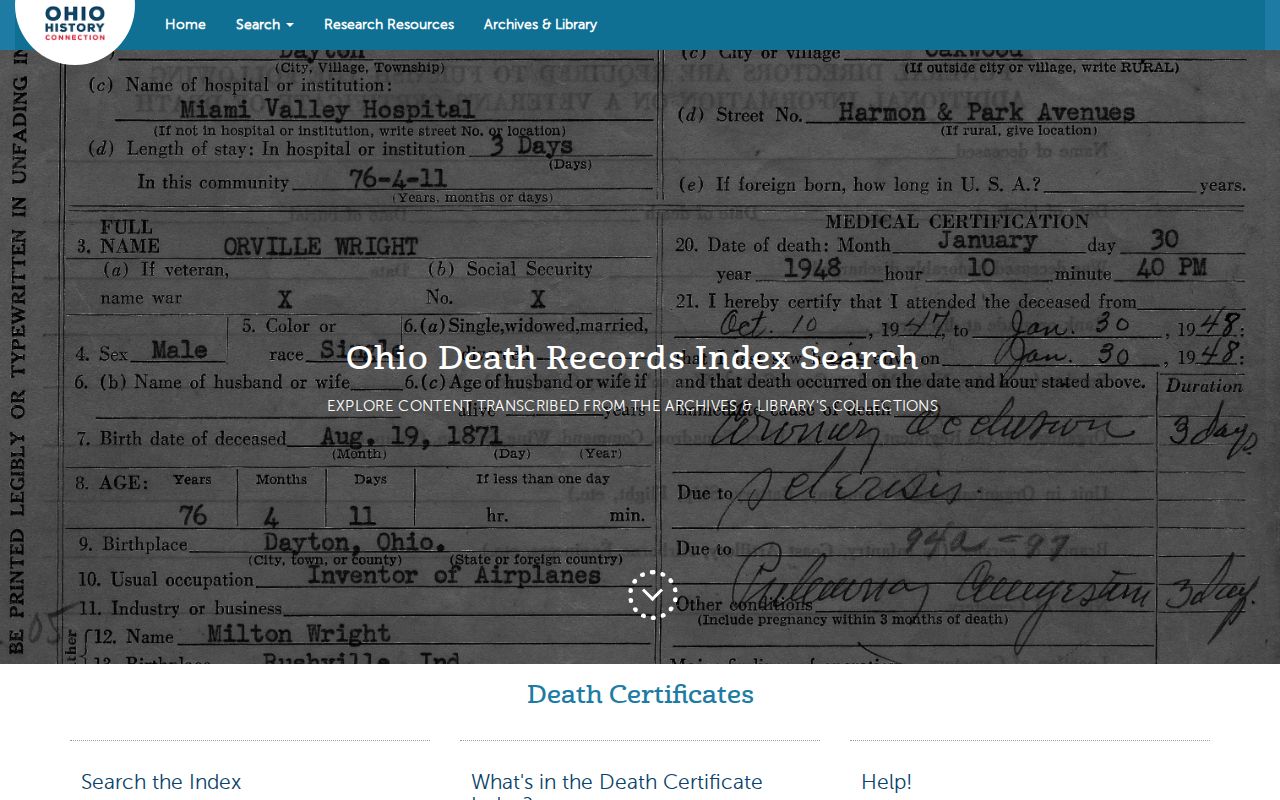
A surname variant and a place or year clue can be more productive than interpreting an online miss as proof that no event occurred.
The Fairfield County Probate Court offers a further estate route: Tyler records are approximately 1991 to the present, while County archives cover approximately 1803 to 1995. Estate materials can identify heirs or real-estate transfers, subject to the court's access limits. Probate information is a way to test a transfer in the chain, not a substitute for the deed itself.
The Probate Court home page identifies the court's records and forms routes.
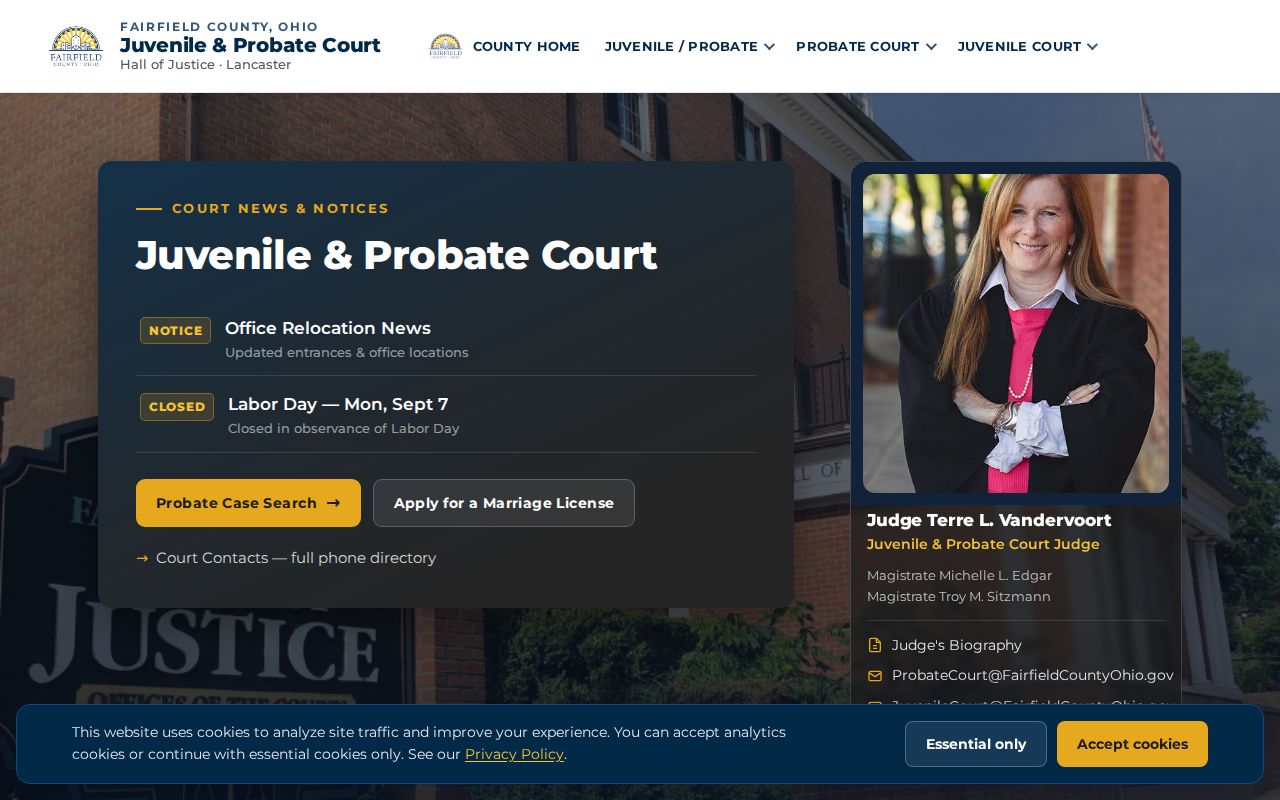
When an estate record points to land, compare its case details against the Recorder's legal description and conveyance history.
Violet Township Previous Residents and Name Variants
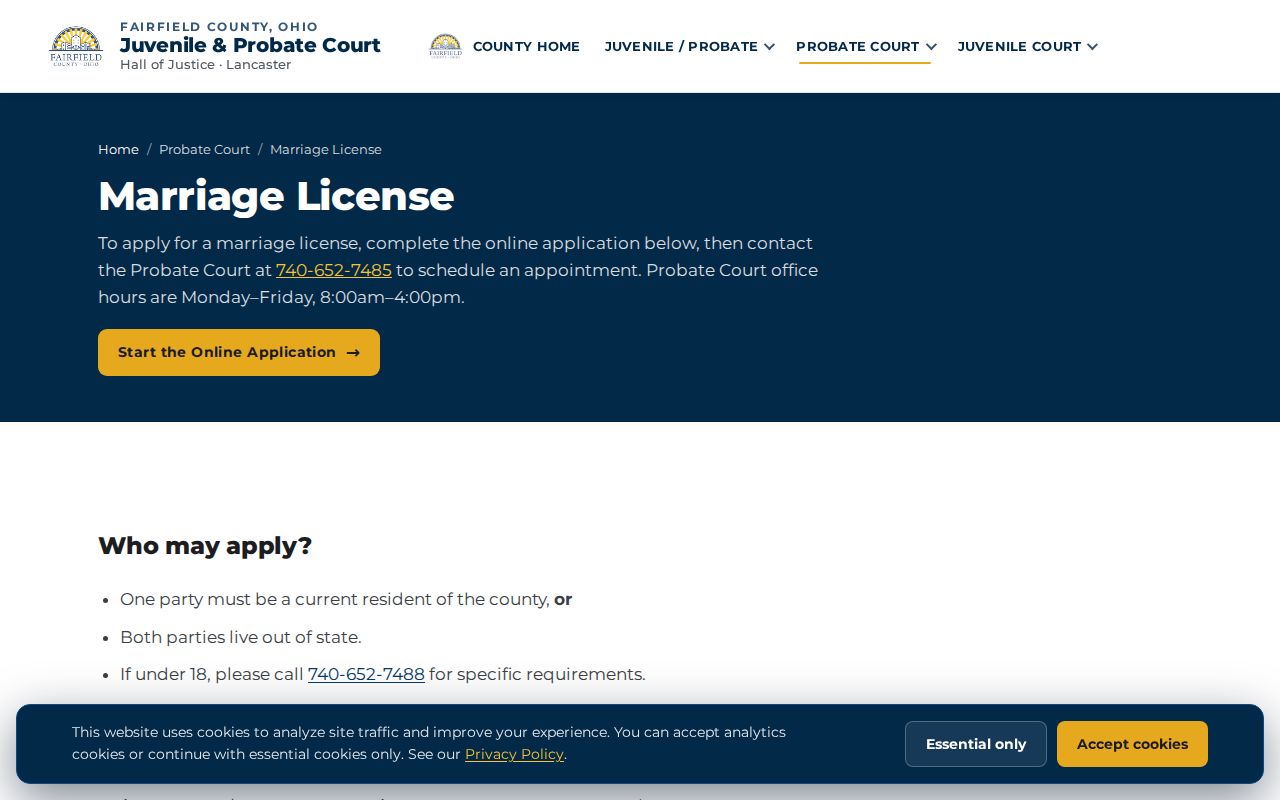
Marriage information can supply a careful name-variant clue for a historical trail. The Fairfield County Probate Court marriage-information route directs applicants through an online application and appointment process, and its certified-copy request asks for each spouse's name before marriage. A certified copy should be requested only through the Court's stated channel and then used as dated event evidence alongside the land and household record.
The marriage-license information page shows the official certificate route and the prior-name detail needed for a focused historical search.
A changed surname can connect records, but only dates, names, and the address or legal-description trail can show whether the evidence belongs to the same historical question.